








Chattancourt Trench
A unique immersion in the heart of the Battle of Verdun

Discover the only recreated and accessible trench on the Verdun battlefield
Located in the heart of the Verdun battlefield, the Chattancourt Trench offers an exceptional glimpse into the daily lives of soldiers in the First World War. Reconstructed near the historic location where the Toulouse and Chattancourt trenches intersected in 1916, it now allows visitors to concretely understand what trench warfare was like.
Unique in its kind, this memorial site is the only fully reconstructed and visitable trench from the Verdun battlefield. Thanks to meticulous work carried out using period documents, photographs, and soldiers' accounts, the visit offers a particularly realistic immersion into the world of the "Poilus" (French soldiers of World War I).
Today, the Chattancourt Trench has become one of the must-see sites for memory tourism in the Meuse and an ideal complement to the discovery of the great sites of Verdun.
Chattancourt at the heart of the Battle of Verdun
The village of Chattancourt holds an important place in the history of the Battle of Verdun.
From 1915, the commune became a support area for French troops. But when the German offensive began on the left bank of the Meuse in March 1916, the sector was quickly plunged into fighting. From March to July 1916, Chattancourt found itself on the front line and suffered violent clashes.
Located in the immediate vicinity of Mort-Homme, one of the deadliest sectors of the Battle of Verdun, the village became a particularly contested strategic point.
The trenches that then surrounded Chattancourt were part of the gigantic defensive network that crossed the battlefield.

A faithful reenactment of trench warfare
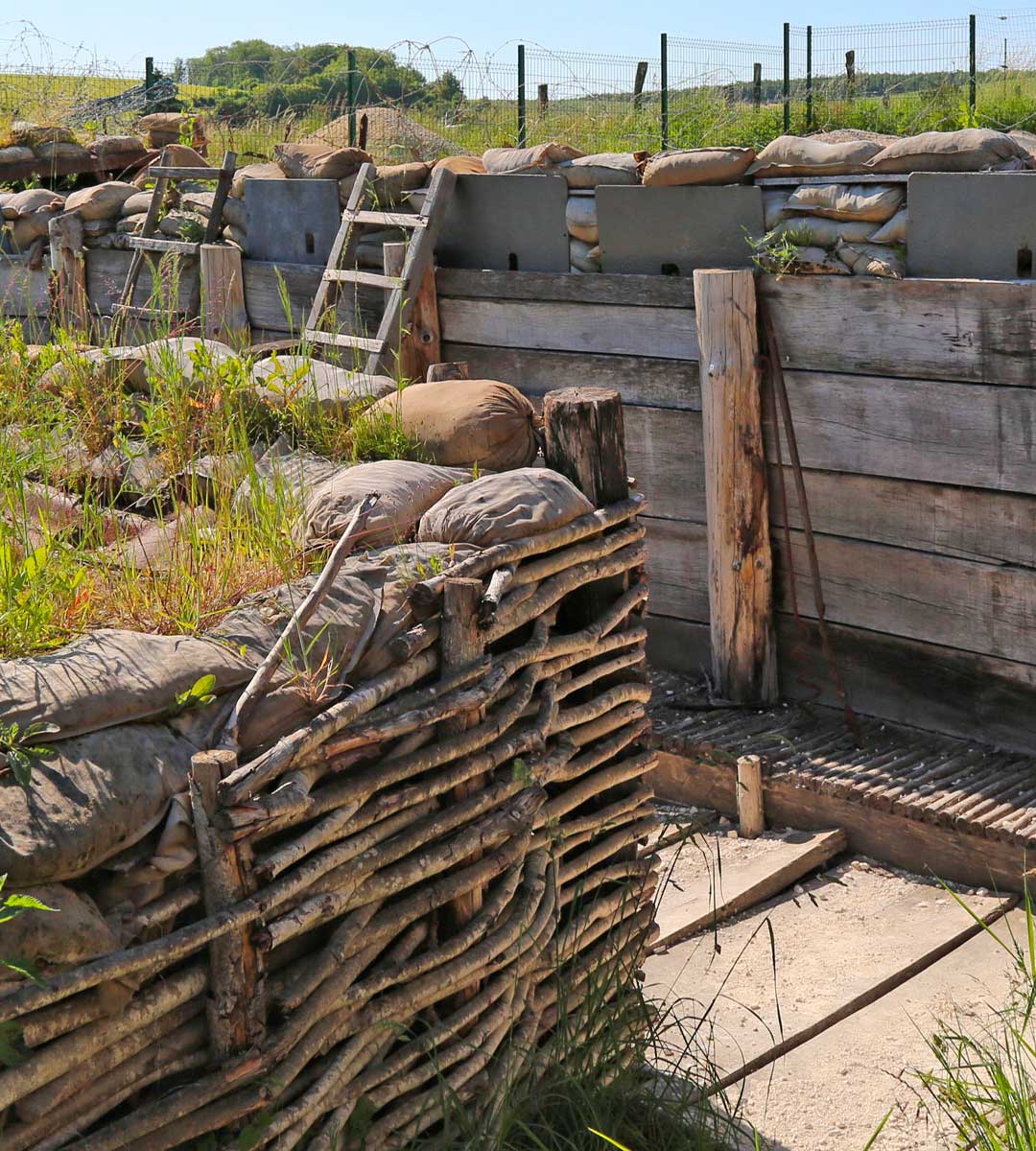
The Chattancourt Trench was created to allow visitors to experience the living conditions of soldiers during the Great War.
Every element of the site has been reconstituted with a remarkable attention to authenticity, based on:
- period military manuals ;
- historic photographs ;
- accounts from combatants ;
- from First World War archives.
The route allows you to discover over 100 metres of faithfully reconstructed trenches and shelters.
Visitors navigate an environment that closely replicates the real organisation of a French front line in 1916.
In the boots of a Poilu
Visiting the Chattancourt Trench allows us to understand the extremely difficult conditions faced by French soldiers.
Along the route, visitors discover:
- circulation ducts ;
- the observation posts ;
- underground shelters ;
- the first-aid post ;
- the telephone socket ;
- Rest areas ;
- the command zones.
The numerous objects on display also make it possible to better understand the daily lives of the combatants:
- military equipment ;
- communication materials ;
- personal items ;
- tools used in the trenches ;
- medical equipment.
This immersion allows us to gauge the harshness of life on the front, marked by mud, cold, bombardments, and the constant waiting for combat.
To understand the Battle of Verdun differently
Chattancourt Trench not only displays historical artefacts. More importantly, it allows for an understanding of the functioning of trench warfare that characterised a large part of the First World War.
Through this reconstruction, visitors discover:
- the defensive organisation of armies ;
- combat techniques ;
- the daily life of the Poilus ;
- sanitary conditions ;
- communications on the front ;
- The stakes of the Battle of Verdun.
This educational approach makes the site particularly popular with families, school groups and history enthusiasts.
A place of remembrance at the heart of the battlefield
Beyond its historical aspect, the Chattancourt Trench also constitutes an important memorial site dedicated to the soldiers of the First World War.
The site notably features a Wall of Memory, allowing visitors to pay tribute to their ancestors who participated in the conflict.
This human dimension reinforces the emotion felt during the visit and reminds us that behind the figures of war lie thousands of individual destinies.
A must-see visit around Verdun
The Chattancourt Trench fits perfectly into a tour of the major Verdun memorial sites.
Nearby, visitors can also discover:
- The Dead Man; ;
- The Douaumont Ossuary ;
- The Verdun Memorial ;
- Fort Douaumont ;
- Fort de Vaux ;
- The destroyed villages of the Battle of Verdun.
Thanks to its immersive approach, the Chattancourt Trench offers a complementary vision of the Great War by focusing on the daily lives of the soldiers.
Why visit the Chattancourt Trench?
Visiting the Chattancourt Trench allows you to:
- to discover the only reconstructed trench on the Verdun battlefield; ;
- to understand the lives of the 'Poilus' during the First World War; ;
- to explore over 100 metres of trenches and shelters; ;
- to discover authentic objects; ;
- to better understand the Battle of Verdun; ;
- to experience a particularly realistic historical immersion; ;
- to visit a major site of memory tourism in the Meuse.
A unique historical experience in Lorraine
More than a century after the battles of Verdun, the Chattancourt Trench serves to transmit the history of the soldiers who experienced one of the most iconic battles of the First World War.
Thanks to the quality of its reconstruction and its exceptional historical setting, it is now one of the most immersive sites dedicated to the 1914-1918 war in France.
Frequently asked questions
Where is the Chattancourt Trench located?
The Chattancourt Trench is located in the Meuse, on the Verdun battlefield, near the Mort-Homme.
The Chattancourt Trench is famous because it was the site of intense fighting during the First World War, particularly during the Battle of Verdun in 1916. It became a symbol of the brutal trench warfare and the heavy losses suffered by both French and German soldiers.
She is known for being the only fully reconstructed and visitable trench on the Verdun battlefield.
How many metres of trenches can be visited?
The route allows you to discover over 100 metres of reconstructed trenches and shelters.
What can be seen during the visit?
Visitors can explore the trenches, shelters, first-aid post, military equipment, and numerous objects related to the daily lives of soldiers.
Is the visit suitable for families?
Yes, the site offers a pedagogical and immersive approach that is particularly appreciated by families and school groups.
The Schoenenbourg Fort and the Fermont Fort are both part of the Maginot Line.
The Chattancourt sector saw heavy fighting during the Battle of Verdun between 1916 and 1917 and was at the heart of French positions on the left bank of the Meuse.