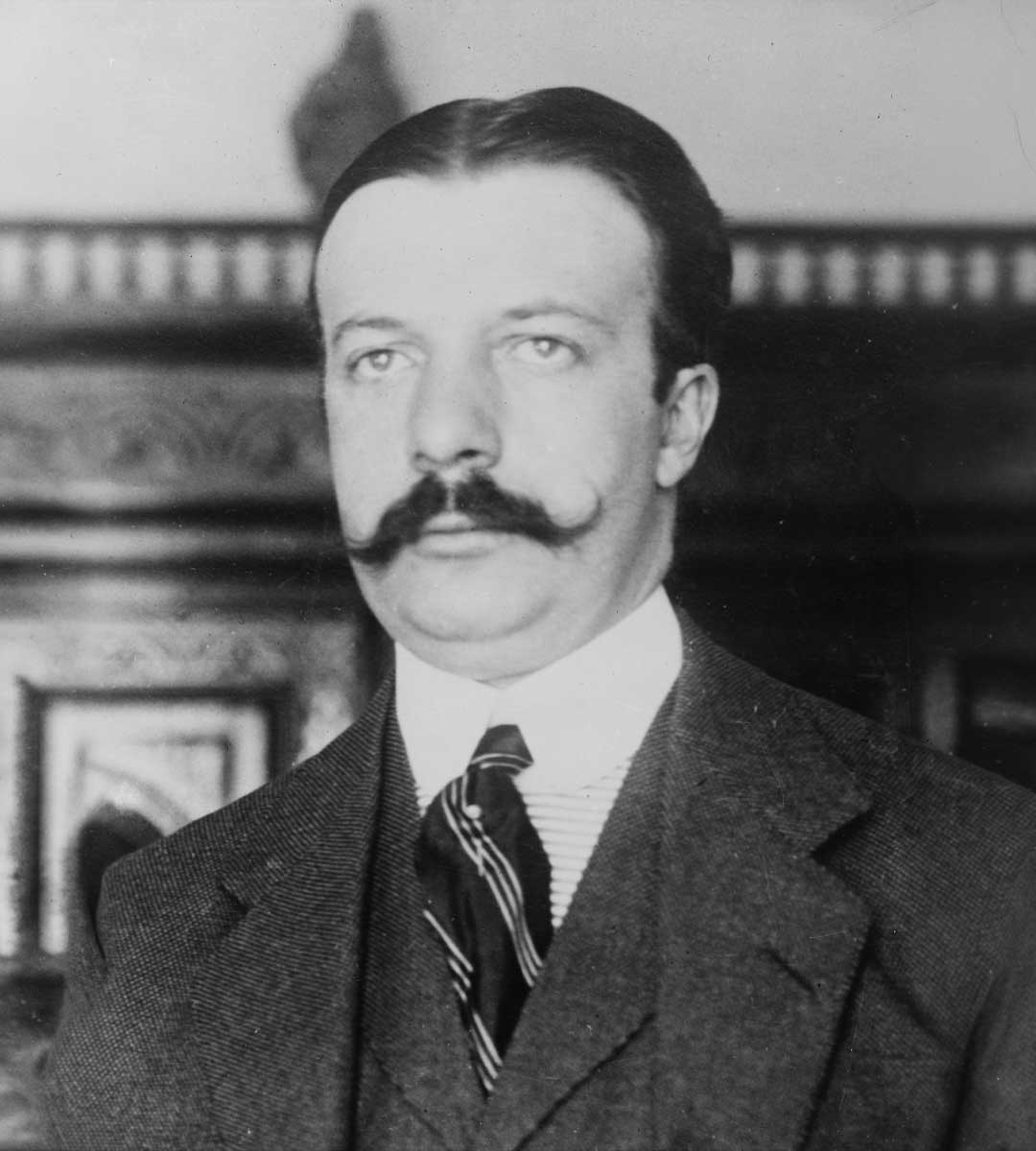
André Maginot
The man who gave his name to the Maginot Line

André Maginot était un homme politique français.
When one mentions Maginot Line, his name immediately springs to mind. Yet, few people truly know the story of André Maginot, the man whose name is today associated with one of the greatest defence systems ever built in Europe.
A French statesman, a patriot deeply marked by the conflicts that affected France in the early 20th century, André Maginot played a decisive role in strengthening national defence after the First World War.
Even though he was not the sole designer of the Maginot Line, his political commitment and support for the project were essential to its realisation. Even today, his name remains inseparable from this immense line of fortifications that runs through French military history.
The origins of André Maginot
André Maginot was born on 17 February 1877 in Paris but spent a large part of his youth in Lorraine, a region then particularly marked by Franco-German tensions.
After the French defeat of 1870 and the annexation of Alsace-Lorraine by the German Empire, the populations of Eastern France lived in a context of high political and military instability.
This proximity to the border territories permanently influences André Maginot's vision of national defence.
After studying law, he embarked on a political career which gradually led him to the highest state responsibilities.

A First World War hero
When the First World War breaks out in 1914, André Maginot is a Member of Parliament for the Meuse region.
Unlike many politicians of his time, he chose to enlist voluntarily in the French army.
Wounded at the front during the early months of the conflict, he bore the lasting effects of this experience throughout his life.
The war makes him fully aware of the need to durably protect French territory against a new invasion.
This conviction will strongly influence his political action in the following years.
Minister of War and defender of the French border
After the war, André Maginot continued his political career and held several important ministerial posts.
He notably became Minister of War on several occasions during the 1920s.
At that time, France was seeking to avoid a catastrophe similar to that of 1914 from happening again.
André Maginot then actively supports an ambitious project:
- to protect France's borders ;
- secure industrial regions; ;
- slow down a potential enemy offensive; ;
- protect civilian populations; ;
- give the army the time it needs to mobilise.
To achieve these goals, he advocates for the funding of a vast programme of modern fortifications.
The birth of the Maginot Line
In 1929, André Maginot secured the vote for the necessary funding to construct an immense network of fortifications along the eastern border.
Work begins rapidly under the supervision of the Fortified Regions Organisation Commission (CORF).
The project includes the construction of:
- artillery emplacements; ;
- military forts ;
- of the casemates ;
- from observatories; ;
- underground shelters; ;
- of communication networks.
The ensemble will form what will become famously known as the «Maginot Line».
Even though.
André Maginot and Lorraine
Alsace-Lorraine holds a particular place in the history of André Maginot.
A former député of the Meuse, he knows the strategic stakes of this border region, which has experienced many conflicts throughout its history, perfectly.
It is notably in Lorraine that some of the most important works of the Maginot Line will be built, including:
- Fort Fermont ;
- The Hackenberg Fort ;
- The Rochonvillers Fort ;
- The Bois du Four Work.
Even today, these sites bear witness to the defensive vision held by André Maginot in the inter-war period.
A constant presence in French history
More than a hundred years after the start of his political career, André Maginot remains a key figure in French military history.
His name is now known far beyond the political world thanks to the Maginot Line, which became one of the most famous symbols of French defence in the 20th century.
While historical debates on the effectiveness of the Maginot Line remain numerous, no one disputes the importance of the role played by André Maginot in the modernisation of French fortifications.
Why discover the history of André Maginot?
Understanding who André Maginot was helps to better understand:
- The origins of the Maginot Line ;
- The French defensive strategy ;
- The consequences of the First World War ;
- France's preparation for European tensions ;
- the history of major military works such as Fort de Fermont.
His journey perfectly illustrates the concerns of an entire generation marked by conflicts and concerned with the lasting protection of national territory.
Frequently asked questions
André Maginot était un homme politique français.
André Maginot is a French politician, former Minister of War, known for having supported the construction of the Maginot Line.
The Maginot Line is named after André Maginot.
Because it played a vital role in the funding and implementation of the fortifications programme built from 1929.
Did André Maginot fight in the First World War?
Yes. He volunteered and was wounded at the front in 1914.
Was André Maginot from Lorraine?
He spent a large part of his political career in Lorraine, notably as a Member of Parliament for the Meuse department.
Le Fort de Fermont est l'un des ouvrages de la ligne Maginot. André Maginot était le ministre de la Guerre qui a initié la construction de cette ligne de fortifications.
The Fort de Fermont is part of the large fortifications built as part of the fortification programme supported by André Maginot.