Paul Painlevé
a key player in the origins of the Maginot Line

A statesman in the service of French defence
When discussing the creation of the Maginot Line, the name of André Maginot naturally comes to mind. However, several personalities contributed to the development of this vast fortifications programme. Among them, Paul Painlevé plays an essential role.
A renowned mathematician, respected scientist, and influential politician, Paul Painlevé actively participated in the strategic deliberations held after the First World War to strengthen the defence of French territory.
Long before the official launch of the Maginot Line, he was already advocating for a modern fortifications system to protect the Eastern borders.
The early life of Paul Painlevé
Paul Painlevé was born in Paris in 1863. From an early age, he distinguished himself through his exceptional intellectual abilities.
After brilliant studies, he became one of the most renowned French mathematicians of his time. His scientific work earned him international recognition and election to the’Academy of Sciences.
But Paul Painlevé's action was not limited to the scientific field. Convinced that science must serve the general interest, he gradually became involved in political life.

An important figure of the Third Republic
At the start of the 20th century, Paul Painlevé held several important government positions.
It becomes, among other things:
- Minister of Public Instruction,
- Minister of War,
- President of the Council,
- member of parliament for many years.
His responsibilities allow him to participate directly in the major decisions concerning the French military organisation.
Paul Painlevé and the First World War
During the First World War, Paul Painlevé played a major role in organising the French war effort.
As Minister of War, he is confronted with the reality of modern combat and the dramatic consequences of the conflict.
The millions of deaths, the massive destruction, and the growing importance of artillery strengthened his conviction that the defence of the national territory needed to be prepared differently.
This experience heavily influences his strategic vision for the post-war period.
The origins of the Maginot Line
After 1918, France had to completely rethink its defence system.
Political and military leaders are seeking to prevent a new German invasion from reproducing the tragedies experienced during the war.
Paul Painlevé was among the first politicians to support the development of significant permanent fortifications on the Eastern border.
He notably defends several principles that will inspire future works on the Maginot Line:
- protection of border regions ;
- deep defence ;
- use of new military technologies; ;
- creation of modern fortified structures ;
- improvement of observation and artillery systems.
Even though the Maginot Line would not be officially launched for a few more years, the discussions in which Paul Painlevé participated contributed significantly to its inception.
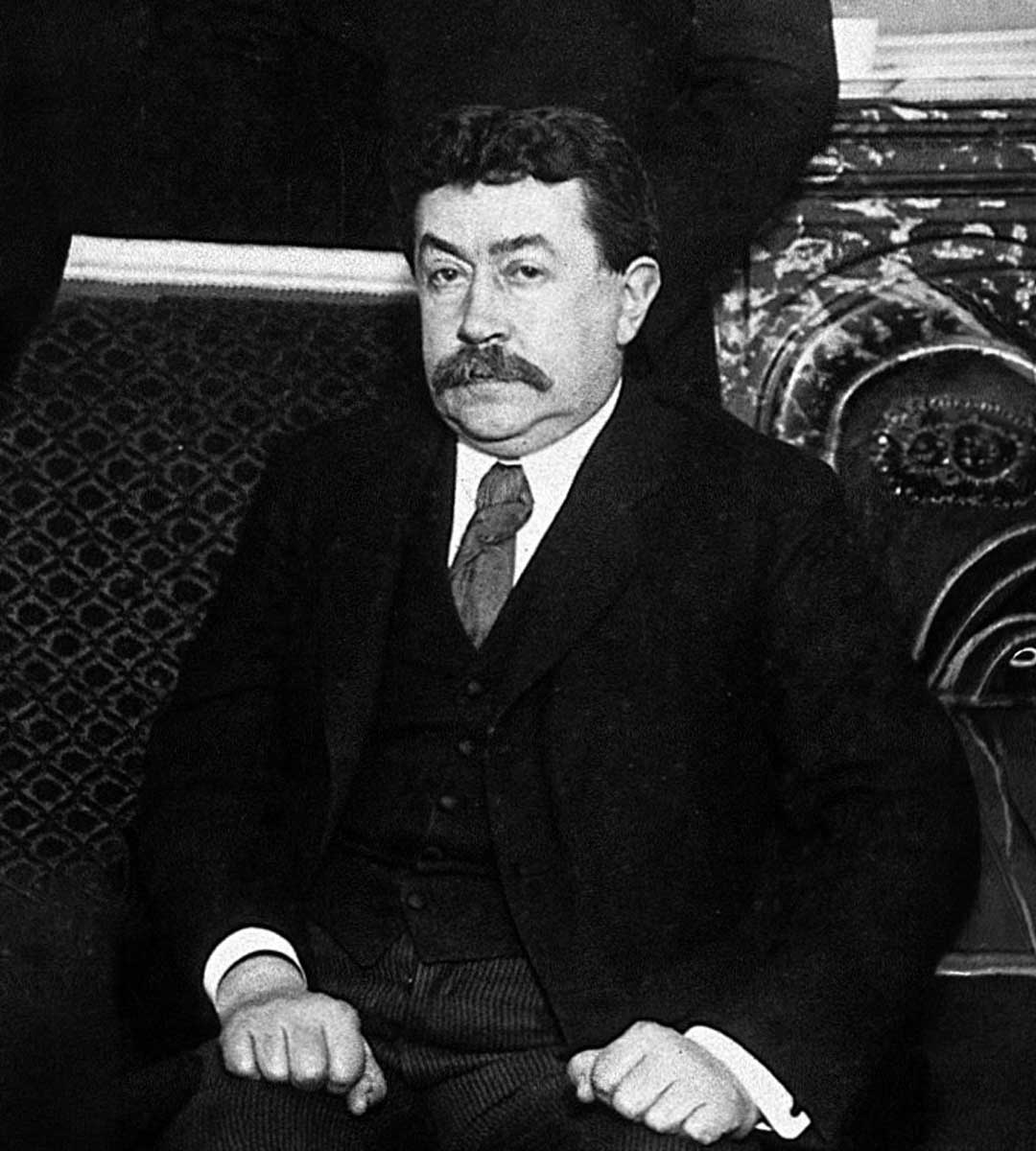
An often-forgotten precursor
In popular history, André Maginot has become the main face of the French fortifications project.
However, many historians today consider Paul Painlevé to be one of the true pioneers of the programme.
Its influence is exerted through:
- strategic studies conducted after 1918; ;
- military reorganisation work; ;
- parliamentary debates on defence ;
- the first considerations regarding permanent fortifications.
His action prepares the ground for the decisions that will subsequently be implemented by André Maginot and the military leaders of the time.
The link between Paul Painlevé and the Maginot Line fortifications
When major works began to emerge from the ground in the 1930s, Paul Painlevé was already considered one of the intellectual architects of French defence policy.
The iconic fortifications of the Maginot Line, such as:
- Fort Fermont ;
- The Hackenberg Fort ;
- The Schoenenbourg Fort ;
- The Bois du Four Work ;
- The Rochonvillers Fort ;
fall within a strategic logic to which he largely contributed.
Even if he did not participate directly in their construction, his influence on French military thinking remains considerable.
A lasting legacy in French military history
The story of Paul Painlevé far exceeds the scope of the Maginot Line.
A scientist, statesman and strategist, he participated in several of the major transformations of France in the early 20th century.
His commitment to national defence helped shape French military choices during the inter-war period.
Even today, his name remains associated with the thinking that led to the creation of one of the most important fortification systems ever built in Europe.
Why discover the history of Paul Painlevé?
Understanding the role of Paul Painlevé allows for a better understanding of:
- The origins of the Maginot Line ;
- French military strategy after 1918 ;
- The consequences of the First World War ;
- the birth of great fortified works; ;
- The history of Fort de Fermont and the other forts of the Maginot Line.
His career reminds us that the creation of the Maginot Line was the result of a long process of reflection in which many politicians, military personnel and engineers participated.
Frequently asked questions
Paul Painlevé était un mathématicien et homme d'État français.
Paul Painlevé was a French mathematician, politician and former Minister of War who played an important role in the deliberations that led to the creation of the Maginot Line.
Paul Painlevé was a French mathematician and politician who served as Prime Minister of France twice. While he died before the construction of the Maginot Line began in the late 1920s, there is a connection through his advocacy for scientific and technological advancement in national defence. Painlevé was a strong proponent of using science and engineering to strengthen France's military capabilities. He believed in investing in research and development to create advanced defences. The Maginot Line, a system of fortifications built by France along its borders with Germany, Italy, and Switzerland, was a direct result of this emphasis on technological and engineering solutions for national security. Although Painlevé did not directly oversee the construction, his influence in promoting a forward-thinking approach to defence likely paved the way for such ambitious projects.
He participated in the strategic debates and reflections on French defence after the First World War, thereby paving the way for the construction of the Maginot Line.
Did Paul Painlevé build the Maginot Line?
No, but he is considered one of the intellectual precursors of the project that would subsequently be developed in the 1930s.
Pourquoi est-il important dans l’histoire militaire française ?
Because he helped modernise French strategic thinking after the First World War and held several key government positions.
What is its connection to Fort Fermont?
Fort de Fermont is part of the defensive system whose strategic foundations were developed during the years Paul Painlevé was involved in national defence discussions.