








Fortress of La Ferté
The Maginot Line fort marked by the tragedy of 1940

A unique place in the history of the Maginot Line
Among all the fortifications of the Maginot Line, the Ouvrage de la Ferté holds a special place. Located near the Belgian border, in the Ardennes department, this military fort is now known for having been the only Maginot Line fortification whose crew perished entirely in combat during the 1940 French campaign in May.
A particularly moving place of remembrance, the Ouvrage de la Ferté bears witness to the courage of the French soldiers who defended their position to the very end against the German advance.
Today open to visitors, this historical site is one of the most significant testaments to the Second World War and the history of the Maginot Line.
The construction of the Ferté Fortification
The Ouvrage de la Ferté was built in the 1930s as part of the Maginot Line fortification programme.
Unlike the large artillery works like the Fort de Fermont, La Ferté belongs to the category of small infantry works.
Its mission consists mainly of:
- monitor the border,
- control the transit axes,
- Protect the Montmédy sector,
- support the other surrounding defensive positions.
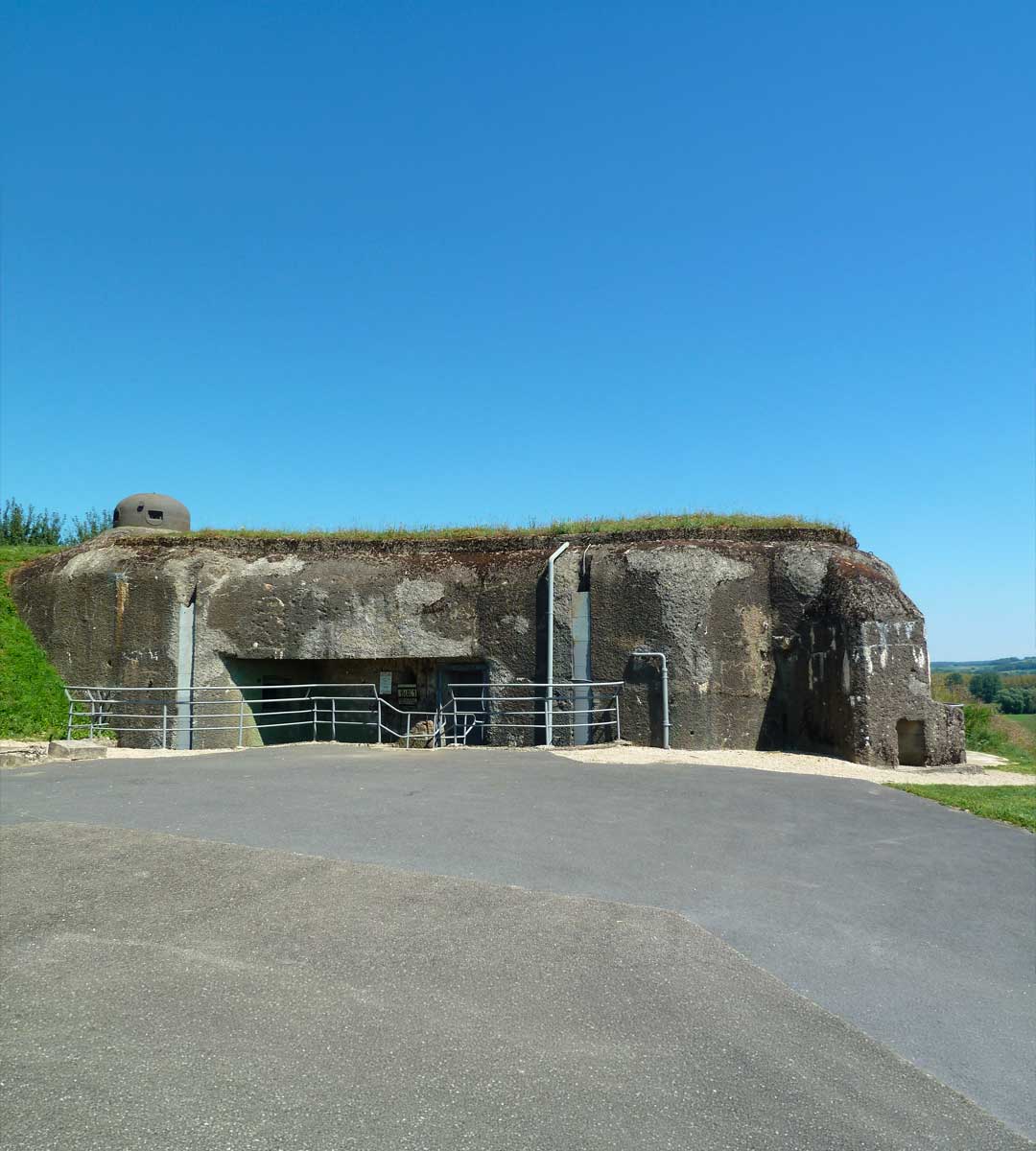
The ouvrage consists of two combat blocks connected by underground galleries. Despite its more modest dimensions compared to some of the larger Maginot Line forts, it represents an important strategic position in the French defensive system.

A strategic position in the Montmédy area
The Ouvrage de la Ferté is part of the Montmédy fortified sector, located in the immediate vicinity of the Belgian and Luxembourgish borders.
Historically, this region has been one of the main routes for armies coming from Northern Europe.
The French military officials therefore wish to establish several fortified positions there, capable of slowing down an enemy offensive and protecting strategic communication routes.
La Ferté is fully participating in this mission thanks to its observation posts and defensive equipment.
The battles of May 1940
The history of the Verdun Fort is intrinsically linked to the dramatic events of May 1940.
After the outbreak of the German offensive through Belgium and the Ardennes, French forces had to contend with an extremely rapid advance by enemy units.
From 18 May 1940, the Ouvrage de la Ferté became progressively isolated.
The German troops then concentrated their attacks on the position. Heavy artillery and anti-tank guns intensively bombarded the combat blocks.
Despite the damage, the crew continues to resist.
The defenders continue to fight even as neighbouring positions fall one after another.
The crew's sacrifice
The repeated bombings eventually severely damage the facilities of the structure.
Deprived of some of their means of defence and facing extremely difficult conditions, the soldiers are nevertheless continuing their mission.
The German attacks eventually cause major damage to the ventilation systems and internal installations.
All 107 members of the crew lose their lives in the work.
This drama makes La Ferté a unique place in the entire history of the Maginot Line.
Today, the soldiers rest in our collective memory as a symbol of the courage and sacrifice of the French fortress troops.
A major site for memory tourism
After the war, the Ouvrage de la Ferté progressively became a memorial site dedicated to the events of 1940.
The site today allows visitors to discover:
- the combat blocks,
- the underground galleries,
- the bomb damage,
- the original military installations,
- Testimonies related to combat.
Unlike many restored works, certain parts of the Ferté have deliberately retained the marks of conflict in order to convey the intensity of the events experienced by the soldiers.
This authenticity makes the visit a particularly memorable experience.
Understanding the Maginot Line through La Ferté
The visit to the Ouvrage de la Ferté also allows for a better understanding of how the Maginot Line worked.
Visitors discover:
- the organisation of French fortifications; ;
- the living conditions of the soldiers ;
- defence systems used before the Second World War ;
- the strategic stakes of the north-east border; ;
- the battles of the French campaign.
The site perfectly complements the discovery of other major works such as the Fort de Fermont or the Ouvrage du Bois du Four.
Why visit the Ouvrage de la Ferté?
Visiting the Fort allows:
- to discover an emblematic site of the Maginot Line; ;
- to understand the fighting of May 1940; ;
- to honour the memory of the soldiers who fell in battle; ;
- to explore authentic underground galleries; ;
- to discover French military history; ;
- to complete the tour of the region's major works.
The historical and commemorative character of the site makes it one of the most striking visits of all the Maginot Line heritage.
An essential testimony of French history
More than eighty years after the events of 1940, the Ouvrage de la Ferté remains a powerful symbol of the sacrifice of French soldiers.
Through its galleries, combat blockages and the still-visible traces of skirmishes, it conveys to current generations the history of those who defended their position to the very last moment.
La Ferté remains today one of the most moving sites of the Maginot Line and an essential visit for all military history enthusiasts.
Frequently asked questions
Where is the Ouvrage de la Ferté located?
L'Ouvrage de la Ferté is located in the Ardennes department, near Montmédy and the Belgian border.
The Ouvrage de la Ferté is famous for being one of the most significant fortifications on the Maginot Line.
It is known for being the only work on the Maginot Line where the entire crew perished during the fighting of May 1940.
How many soldiers were present in the fort?
The crew numbered 107 servicemen during the fighting in 1940.
Can one visit the Ouvrage de la Ferté?
Yes, the site is open to visitors and is an important Second World War memorial.
What is the connection between La Ferté and the Fort de Fermont?
The two works belong to the Maginot Line and allow for an understanding of different facets of French military history before and during the Second World War.