








A5 Work of Bois du Four
Fort of the Maginot Line

A major work of the Maginot Line in Lorraine
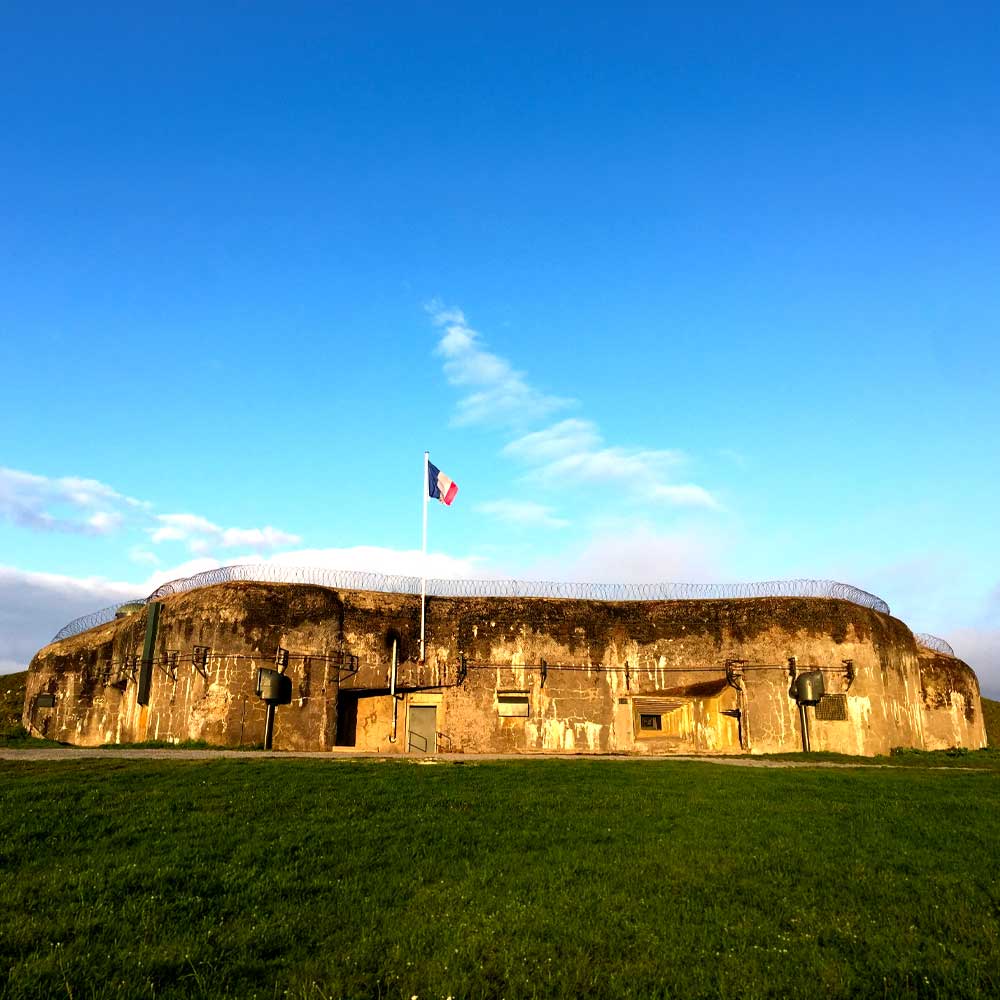
Located in Lorraine, close to the Luxembourgish border, Ouvrage A5 du Bois du Four is one of the most iconic structures of the Maginot Line. Built during the 1930s to participate in the defence of northeastern France, this impressive military fort still bears witness today to the ingenuity of French fortifications before the Second World War.
In the heart of the forests of Pays-Haut, the Bois du Four Fortification was part of the powerful defensive system devised to protect the French border against an enemy invasion. With its combat blocks, underground galleries and military equipment, this Maginot Line ouvrage is an essential site for military history enthusiasts and those interested in remembrance tourism.
Even today, the A5 Ouvrage in Bois du Four fascinates visitors with its military architecture, its history, and the unique atmosphere that pervades its underground installations.
The story of ouvrages A5 of Bois du Four
The A5 Ouvrage of Bois du Four was constructed in the 1930s as part of the vast defensive programme of the Maginot Line. This line of military fortifications was intended to protect France against attacks from the east, following the traumas of the First World War.
The Bois du Four then occupied an essential strategic position in the fortified sector of Crusnes. Its role was to monitor enemy advance routes and provide defensive support with its artillery equipment and firing positions.
Like many fortifications on the Maginot Line, Ouvrage A5 du Bois du Four was designed to operate autonomously for several weeks. The soldiers had:
- underground barracks,
- food reserves,
- of ventilation systems,
- of a power station,
- from shops to ammunition,
- of an internal communication network.
This organisation turned the work into a veritable underground fortress capable of withstanding bombardments and enemy attacks.

An impressive military architecture
Ouvrage A5 in Bois du Four perfectly illustrates French military engineering between the two World Wars. The complex comprises several combat blocks connected by underground galleries dug deep into the rock to protect the military installations.
Visitors can discover:
- the combat blocks,
- the casemates,
- the observatories,
- the firing posts,
- the military galleries,
- the technical installations,
- the living quarters of soldiers.
The structure's architecture had been designed to withstand heavy bombardments, thanks to reinforced concrete walls several metres thick and protection systems that were particularly advanced for the time.
The armoured turrets and defence systems installed on the structure made it possible to survey the surrounding area and effectively protect the French border.
The underground galleries of the Maginot Line
Like all the major works of the Maginot Line, Bois du Four possesses a vast network of underground galleries connecting the different parts of the fortress.
These galleries allowed:
- the movement of the soldiers,
- the transport of ammunition,
- the movement of military equipment,
- Protecting troops during combat.
Underground, the soldiers lived in very particular conditions. The structure functioned like a true underground city with:
- dormitories,
- cuisines,
- power station,
- infirmary,
- air filtration systems,
- water and fuel reserves.
Even today, these installations impress visitors with their size and state of preservation.
The A5 Fortification of Bois du Four during the Second World War
During the fighting in 1940, the Bois du Four Ouvrage (fortification) participated in the defence of French territory against the German advance. Like many fortifications of the Maginot Line, it resisted attacks until the armistice of June 1940.
The history of Ouvrage A5 du Bois du Four helps to better understand the role of the Maginot Line during the Second World War, as well as the living conditions of the soldiers mobilised in the French fortifications.
The visible scars on some structures still serve as a reminder today of the violence of the clashes and the strategic importance of these military works in French defence.
A must-visit site for Maginot Line enthusiasts
L’Ouvrage A5 du Bois du Four is attracting today:
- military history enthusiasts,
- Maginot Line enthusiasts,
- visitors interested in the Second World War,
- school groups,
- Tourists in Lorraine,
- military heritage enthusiasts.
The site is an essential stop for discovering how French fortifications worked and gaining a better understanding of the history of northeastern France during the war.
Thanks to its natural environment and spectacular military architecture, Bois du Four offers an immersive experience particularly enjoyed by visitors.
Why uncover Ouvrage A5 in Bois du Four?
Visiting Ouvrage A5 du Bois du Four means:
- discover a real Maginot Line fort,
- explore historic underground galleries,
- Understanding the French military organisation of the 1930s.,
- Discover the history of the 1940 battles,
- admire impressive military architecture,
- experience a unique immersion into the world of the Second World War,
- visit a major site of memory tourism in Lorraine.
Prepare your visit to the Maginot Line Museum
Situated in Lorraine, near Longwy, Verdun, Metz, Luxembourg and Belgium, Fort de Fermont is an unmissable destination for all military history enthusiasts.
The museum and underground galleries are accessible during the tourist season as well as for groups by appointment.
As the temperature in the galleries remains cool all year round, it is advisable to bring appropriate clothing, even in summer.
Frequently asked questions
What is the A5 Work of the Bois du Four?
Fort A5 in Bois du Four is a Maginot Line military fort built in the 1930s to defend France's northeastern border.
The Bois du Four Fortification is located in [precise location].
The work is set in Lorraine, in the fortified sector of Crusnes, near the Luxembourg border.
Can the underground galleries be visited?
The work possesses an important network of underground galleries typical of Maginot Line fortifications.
What was the role of Ouvrage A5?
The work ensured the strategic defence of the sector through its combat blocks and artillery systems.
The Maginot Line was built to defend France's eastern border against a potential invasion from Germany.
The Maginot Line was built after the First World War to protect France from a new invasion coming from the east.
Did the A5 ouvrages in the Bois du Four participate in the fighting in 1940?
Yes, like several works on the Maginot Line, the Bois du Four participated in the French defence during the 1940 campaign.
Where is the Maginot Line Museum located?
The museum is located at the Fort de Fermont, in Lorraine, near Longwy and Luxembourg.