


Mine d’Hussigny
at the heart of Lorraine's mining history

Discover one of the major witnesses to the industrial heritage of the Pays-Haut
Located in Hussigny-Godbrange, in Meurthe-et-Moselle, the Hussigny Mine is an exceptional testament to the industrial history of Lorraine. For over a century, iron mines have shaped the landscapes, the economy, and the daily life of an entire region.
Today, the Hussigny Mine allows visitors to discover a world often unknown: that of the miners who worked every day several tens of metres underground to extract the iron ore that contributed to French industrial development.
Between heritage, working-class memory, and technical discovery, the visit offers a fascinating immersion into the history of the Lorraine iron ore basin.
The history of the Hussigny Mine
Lorraine possesses one of Europe's most significant iron ore basins. From the 19th century onwards, the exploitation of iron ore experienced spectacular development thanks to industrial progress and the rise of the steel industry.
The Hussigny-Godbrange region is rapidly becoming a major centre for mining. Generations of miners toiled in the underground galleries to feed the blast furnaces of Lorraine, Luxembourg and neighbouring regions.
Mining transforms the landscape profoundly:
- development of mining villages ;
- the arrival of workers from all over Europe; ;
- construction of workers' housing estates ;
- economic boom of the region; ;
- creation of a unique industrial heritage.
For decades, the mine has set the rhythm of local life and contributed to Lorraine's industrial standing.

The work of miners
Descending into the mine allows for a better understanding of the working conditions of the men who dedicated their lives to ore extraction.
Visitors discover:
- the underground galleries ;
- extraction methods ;
- the tools used by miners ;
- ore transport systems ;
- retaining techniques ;
- safety equipment.
The visit also highlights the difficulties of the trade: darkness, damp, noise, dust, and physical hardship were all part of the miners' daily lives.
Despite these demanding conditions, solidarity and community spirit were strong values of the mining world.
An immersion into the underground galleries
One of the highlights of the visit is the discovery of the underground galleries.
As visitors explore the old operational networks, they become aware of the impressive scale of the work carried out underground.
The constant temperature, the particular atmosphere of the galleries and the preserved installations allow for a better understanding of the miners' daily lives.
This immersion offers an authentic and particularly memorable experience for industrial heritage enthusiasts and families alike.
Iron ore, the wealth of Lorraine
The development of the mine is directly linked to the presence of the iron ore called «Lorraine minette».
This natural resource played an essential role in the industrialisation of the region.
For over a century, the ore extracted in Hussigny and neighbouring communes has fed:
- the blast furnaces ;
- the steelworks ;
- steelworks ;
- the metallurgical industries.
Lorraine thus becomes one of the main industrial centres in Europe.
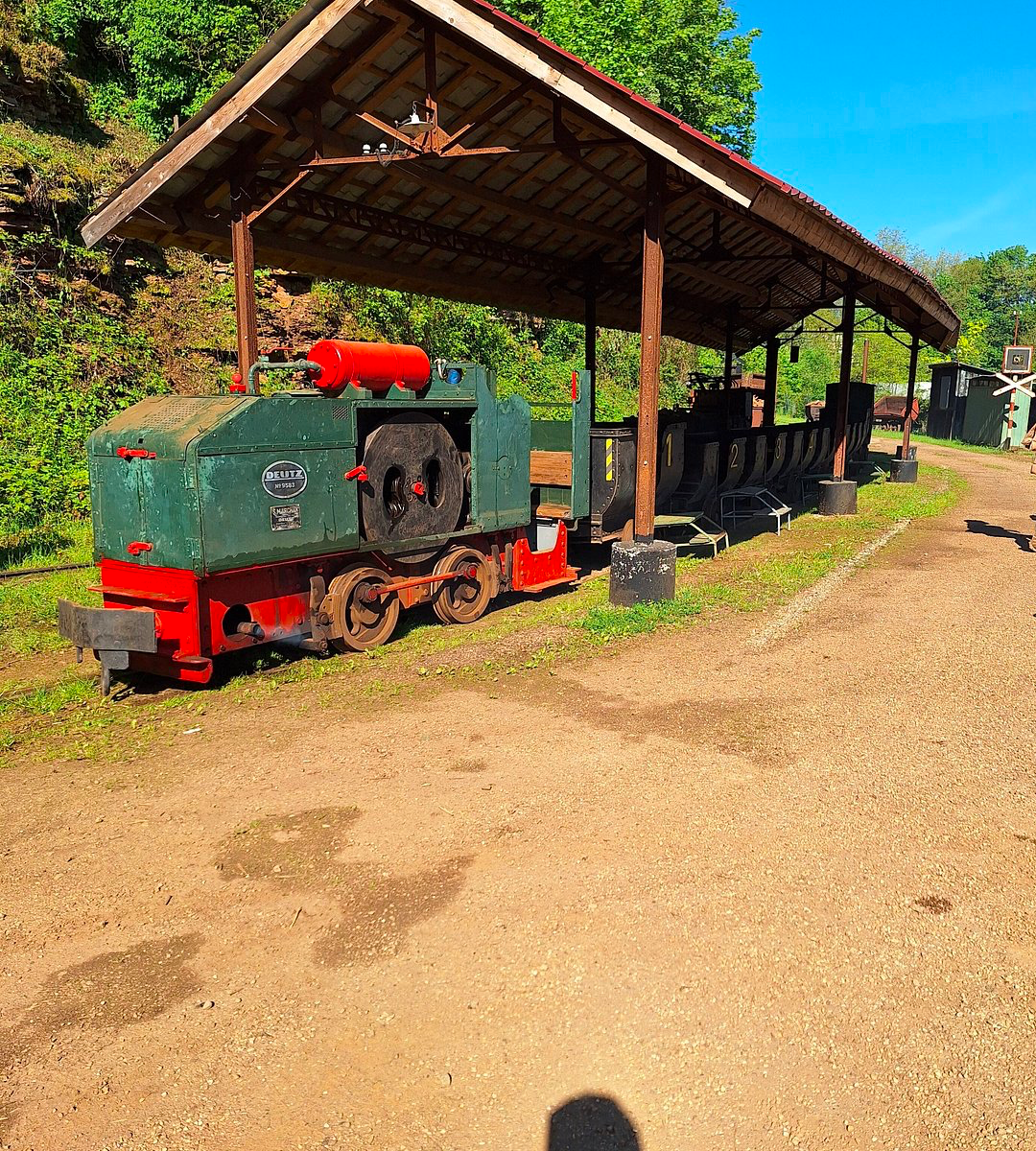
A heritage to preserve
With the gradual closure of mines throughout the 20th century, a significant part of this heritage risked disappearing.
Thanks to the work of associations, volunteers, and local history enthusiasts, several mining sites have been saved in order to pass on this heritage to future generations.
The Hussigny Mine is participating today in this essential mission of preserving Lorraine's industrial heritage.
A must-see place near Fort Fermont
The Hussigny Mine is an excellent idea for a complementary visit during a stay in northern Lorraine.
Nearby, visitors can also discover:
- Fort Fermont ;
- the works of the Maginot Line ;
- Longwy and its fortifications ;
- The industrial sites of the Lorraine basin ;
- The heritage of Pays-Haut.
This diversity allows for a better understanding of the economic, industrial, and military history that has shaped the region.
Why visit the Hussigny Mine?
Visiting the Hussigny Mine allows you to:
- to discover the mining history of Lorraine; ;
- to explore ancient underground galleries; ;
- to understand the work of miners; ;
- to discover iron ore mining; ;
- to explore a unique industrial heritage; ;
- to live an immersive and authentic experience; ;
- to complete the historical discovery of northern Lorraine.
Frequently asked questions
The Hussigny Mine is located in Hussigny, France.
The Hussigny Mine is located in Hussigny-Godbrange, in Meurthe-et-Moselle, near Longwy and the Luxembourgish border.
What is discovered during the visit?
Visitors discover the underground galleries, extraction techniques, miners' tools, and the history of the Lorraine iron ore basin.
Pourquoi la Lorraine était-elle une grande région minière ?
Thanks to the significant presence of iron ore in its subsoil, Lorraine has become one of Europe's main steelmaking centres.
Is the visit suitable for families?
Yes, the discovery of the mine allows both young and old to understand industrial history in a concrete and immersive way.
The Hussigny Mine and the Fort de Thionville are linked by their strategic importance during the Maginot Line's construction. The iron ore extracted from the Hussigny Mine, particularly in the early 20th century, was a vital resource for the French steel industry. This industry, in turn, was crucial for the production of the armaments and fortifications, including the Fort de Thionville, that formed part of the Maginot Line. Therefore, the mine provided the raw materials essential for the construction and defence of the fort.
These two sites bear witness to the history of the Lorraine region and offer complementary visits to discover the area's industrial and military heritage.