







Schoenenbourg Fort
The most heavily bombed fort on the Maginot Line

Discover one of the most impressive works of the Second World War
Located in Alsace, near the German border, the Schoenenbourg Fort is one of the most famous structures of the entire Maginot Line. A true subterranean giant built in the 1930s, this impressive military fort is today considered one of the best-preserved historical sites in France.
Known for having undergone massive bombings during the fighting in 1940 without ever being defeated, the Schoenenbourg Fort today represents an exceptional testament to French military history and the Second World War.
Thanks to its underground galleries, combat blocks, artillery turrets and original installations that are still visible, it constitutes one of the most spectacular visits along the entire Maginot Line.
A major work on the Maginot Line in Alsace
The Schoenenbourg Fort, also known as the Schoenenbourg Works, was built between 1931 and 1935 in the Haguenau fortified sector, in the north of Alsace. It is part of the large artillery works intended to protect the French border facing Germany.
The work is comprised of:
- 8 combat blocks; ;
- several fortified entrances ;
- nearly 3 kilometres of underground galleries; ;
- full military facilities ;
- powerful artillery equipment; ;
- advanced defence systems for the time.
At its peak, the fort could house over 600 soldiers and officers tasked with defending the sector.

A veritable underground fortress
Like the greatest works of the Maginot Line, Fort Schoenenbourg is designed to operate totally autonomously in the event of war.
At nearly 30 metres underground, the soldiers have:
- barrack rooms ;
- cuisines ;
- infirmary ;
- power station ;
- Boilers rooms ;
- ammunition reserves ;
- Ventilation and air filtration systems.
The complex forms a veritable military underground city capable of withstanding the most violent bombings.
Even today, the majority of the original installations are perfectly preserved, offering an exceptional immersion into the world of French fortifications from the 1930s.
The most heavily bombarded fort on the Maginot Line
Schoenenbourg Fort is particularly famous for its role during the 1940 invasion of France.
During the fighting, it became one of the main targets for German artillery. The work endured thousands of shells, aerial bombardments, and repeated attacks.
The figures remain impressive:
- over 15,000 shells received; ;
- heavy artillery bombardments; ;
- air strikes ;
- direct impacts on several combat blocks.
Despite this exceptional violence, the fort continued to operate and pursue its mission until the armistice.
Fort Schoenenbourg thus remains one of the most striking symbols of the resistance of the Maginot Line fortifications.
Impressive turrets and combat blocks
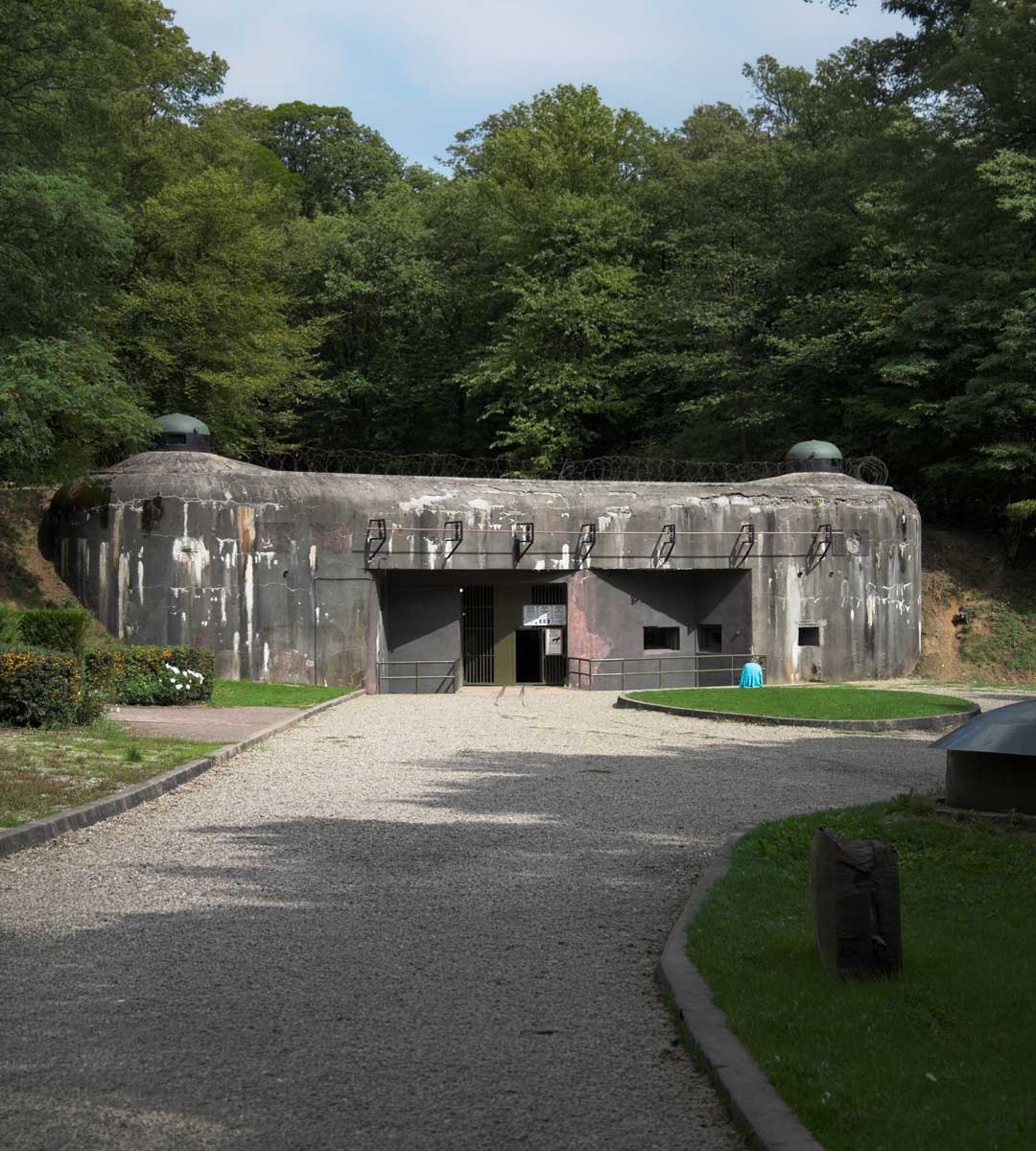
One of the most spectacular elements of the Schoenenbourg Fort is the presence of powerful artillery installations.
Visitors can discover:
- armoured turrets ;
- combat blocks ;
- observatories; ;
- firing systems; ;
- fortress defence installations; ;
- Authentic military equipment.
These facilities allow us to understand the extremely sophisticated workings of the Maginot Line fortifications and the considerable resources deployed to protect the French border.
An immersive visit to the heart of the Maginot Line
Today, Fort Schoenenbourg is considered one of the most beautiful accessible sites on the entire Maginot Line.
The visit allows us to explore:
- nearly 3 kilometres of underground galleries; ;
- barracks ;
- military kitchens ;
- power stations ;
- command rooms ;
- the technical installations ;
- Combat blocks.
The work has been restored to its original appearance, offering visitors a particularly realistic immersion into the daily lives of fortress soldiers.
An exceptional historical monument
Fort Schoenenbourg is now listed as a historic monument and is among the major sites for memorial tourism in France.
Its remarkable state of conservation makes it a unique place for understanding:
- The history of the Maginot Line ;
- The French defensive strategy ;
- the battles of 1940 ;
- the soldiers' lives ;
- The evolution of 20th-century military fortifications.
In 2022, the Fort de Schoenenbourg even rose to second place in the show «France's Favourite Monument», confirming its heritage importance.
Schoenenbourg Fort and Fermont Fort
Schoenenbourg Fort and Fermont Fort are among the most iconic Maginot Line sites open to the public.
While the Fermont Fort is particularly renowned for its exceptional museum and artillery collection, the Schoenenbourg Fort impresses with its authenticity, state of preservation, and its major role during the fighting in 1940.
A visit to the two sites allows you to discover two of the greatest testaments to French military history during the Second World War.
Why visit the Schoenenbourg Fort?
Visiting the Schoenenbourg Fort allows you to:
- to discover one of the greatest works of the Maginot Line; ;
- to explore 3 kilometres of underground galleries; ;
- to understand the fighting of 1940; ;
- to observe authentic military equipment; ;
- to discover the daily lives of soldiers; ;
- to visit the most heavily bombed fort on the Maginot Line; ;
- to experience a unique immersion into the history of the Second World War.
Frequently asked questions
The Schoenenbourg Fort is located in Alsace, France.
Fort Schoenenbourg is located in Alsace, in the Bas-Rhin department, near Hunspach and the German border.
Le Fort de Schoenenbourg est célèbre car il est l'un des forts les plus impressionnants de la Ligne Maginot. Il est connu pour sa taille imposante, son réseau de tunnels souterrains, ses nombreuses salles d'artillerie et son rôle stratégique pendant la bataille de France en 1940. Il a résisté aux assauts allemands pendant plusieurs jours et est resté invaincu.
It is known for being the most heavily bombed ouvrage on the entire Maginot Line, while remaining unvanquished during the fighting of 1940.
How many kilometres of galleries does the fort have?
The visitor trail allows you to discover nearly 3 kilometres of underground galleries.
How many soldiers could live in the structure?
The fort could house approximately 630 men.
Can Schoenenbourg Fort be visited?
Yes, the fort is open to the public and is one of the main accessible sites of the Maginot Line in Alsace.
The Schoenenbourg Fort and the Fermont Fort are both part of the Maginot Line.
The two works are among the most famous fortifications of the Maginot Line and today represent major sites for memorial tourism in France.